
UK Barcode Scanner Buying Guide for IT & Operations Team

Updated: Mar 18
Introduction
Whether you run a warehouse in the Midlands, a store on the high street or a healthcare trust with many facilities, one key decision that affects how well your business works often gets overlooked. This decision is about choosing the barcode scanner. Getting it wrong can waste time and resources fixing problems. Getting it right can bring real benefits to your business.
The barcode scanner market in the UK has grown a lot over the years. While most people just choose between a scanner and one thats fixed in place businesses today have many more options. These include barcode scanners, 2D barcode scanners, QR code scanners, wireless barcode scanners and laser scanners. This article will help people who buy things for businesses IT managers and operations managers make a choice when buying barcode scanners for their business.The barcode scanner is really important, for business operations.
Types of Barcode Scanners and Their Business Use Cases
When you want to pick a scanner you need to know about the types of scanners. You have to do this before you can compare companies and ask for prices.
1D Laser Scanners
The old style laser scanner is made for reading the usual 1D barcodes that are lined up. These are the barcodes you see often and they are usually on labels in stores on boxes and on shipping papers. They work fast and they are very good, at what they do. People usually use them in places where they have to scan a lot of codes that are all printed and lined up the way. For example in the United Kingdom, stores and shipping companies that deal with a lot of items can use a 1D barcode scanner and it is not very expensive.
2D and QR Code Scanners
A 2D barcode scanner works by taking a picture. It does not use a laser beam. This helps 2D scanners read types of codes such as linear codes and matrix codes. This is very important in certain areas. In healthcare 2D scanners are used for NHS patient wristbands and medication labels.
In manufacturing, they help track components to ensure product safety in the UK. They are also useful for managing returns. A QR code scanner can read codes on a smartphone screen. This is useful for checking in at events. It is also helpful at customer service points in stores. QR code scanners make it easy to read codes on screens. They are widely used in industries.
Handheld Scanners
The commonly used type of scanner in businesses in the UK is the handheld scanner. It is really useful in the stock room and on the shop floor because it is easy to handle and use. Some scanners can be used as scanners. They can also be used as computers, with Android interfaces. These interfaces can work directly with ERP and WMS systems. These are very flexible. They make it easy to get work done in certain areas.
Wireless and Bluetooth Scanners
Wireless barcode scanners using Bluetooth or Wi-Fi technology are increasingly common in environments where cable usage is impractical, such as large warehouse floors, outdoor goods-in areas, and pop-up retail stores. The ability of a wireless scanner to maintain a connection over an adequate distance without loss of signal is an important consideration for older warehouse buildings in the UK with thick walls.
POS Barcode Scanners
When you are working in a shop you need POS barcode scanners that can deal with a lot of customers at the time. These POS barcode scanners are usually placed in a holder or they can scan things from any direction, which makes checking out go faster. It is really important that these POS barcode scanners work with the computer systems that shops use, like Lightspeed or iZettle or the special systems that some shops have made for themselves. You have to make sure that your POS barcode scanners are compatible, with these systems when you buy them.

Key Features UK Businesses Should Focus On
When you are thinking about getting barcode scanner machines for your business there are some things to consider. You need to think about these things when you are deciding what to buy. It is not just about how much it costs at first.
Decode capability and scanning range:
If a scanner is not very good at reading labels that are damaged or hard to read it will actually cost you money in the long run. You should look for scanner models that're really good at decoding and can read labels from a distance that works for your business. Barcode scanner machines with decode capability will help your UK business.
Connectivity and system integration:
If your UK business uses systems like SAP, MS Dynamics, Sage or a system that is for your business you need to make sure the barcode scanner you choose works with those systems. This means it needs to be able to connect using things like USB HID RS-232, Bluetooth SPP or networks. A lot of people make mistakes when they buy barcode scanner machines because they think they will work with their system. They do not check first. UK businesses should make sure their barcode scanner machines integrate with their systems.
Build quality and IP rating:
If you have a business that works in a warehouse or a factory you need barcode scanner machines that're strong and can withstand being dropped or getting wet. You should look for machines with a rating of IP54 or higher which means they can handle conditions. This is important for the people in charge of buying barcode scanner machines for your UK business. Barcode scanner machines, with build quality will last longer and work better for your business.
Battery life on wireless models:
Wireless bar code scanners that need recharging during a shift cause unwarranted disruption. For intense use, battery life through a shift is essential as is quick recharging.
UK-based warranties and support:
The proximity of after-sales service is significant when purchasing business-critical equipment. UK-based suppliers with technical support, next day replacement schemes, and experience in your industry are much more reassuring when purchasing equipment than buying solely on price from a company with an overseas operation.
Buying Considerations for UK Procurement Teams
Budget, Volume, and Total Cost of Ownership
When you are looking at barcode scanners for sale you need to remember that the cost is not just the price you see. You also have to think about the extras like cradles and cables and cases to protect the scanners.. You have to consider the cost of software to manage these barcode scanners. Even though the best barcode scanners from companies are expensive the total cost of owning them is actually less, over three to five years.
Regulatory and Compliance Considerations
The UK-based food and drink industry, pharmaceutical industry, and medical devices industry all operate under a set of traceability standards that ultimately dictate what is required when specifying a scanner. GS1 UK is the standards authority that is responsible for managing barcode standards within this country, and they provide information on what barcode standards are mandated within specific industries. The NHS has adopted the GS1 standards framework within procurement and supply chain management, so if a healthcare organization is purchasing a barcode scanner machine, then full GS1 compliance is required. For more information, product comparison tools offered by established UK-based distributors can be a useful tool in comparison.
Scalability and Fleet Management
When companies want to grow their business they might open stores hire people for a short time or sell things in new places. They should think about if the scanners they choose can be managed from one place. This is a deal for companies because it helps them keep track of all their devices.
Refurbished vs. New
Some people might like to buy refurbished scanners from sellers because they can save money. These refurbished scanners should come with a warranty and be fixed up really well. This can be an option for devices that are known to work well and come from good companies.. For places like stores where people buy things or hospitals it is better to buy new scanners. New scanners are a choice, for these kinds of places. Companies should think about what kind of scanners they need, like refurbished or new scanners to help their business work well.
Pilot Before You Commit
It is an idea to try out something before you buy it. When you can ask to see a demonstration of the scanner or do a test run before you actually buy it. The scanner may work differently in your place compared to somewhere else. So doing a test with your own labels and the lighting you have will always be more helpful than just reading the details, about the scanner.
Market Trends and Recommended Vendor Categories
The barcode scanner market is getting better and better. Imager-based scanners are slowly taking the place of laser technology even when we only need to scan one dimensional codes. This is because they are more flexible and the cost is going down.
RFID technology is being used to help barcode technology. It is not being used as much as people thought it would be in the UK especially because it is still pretty expensive.
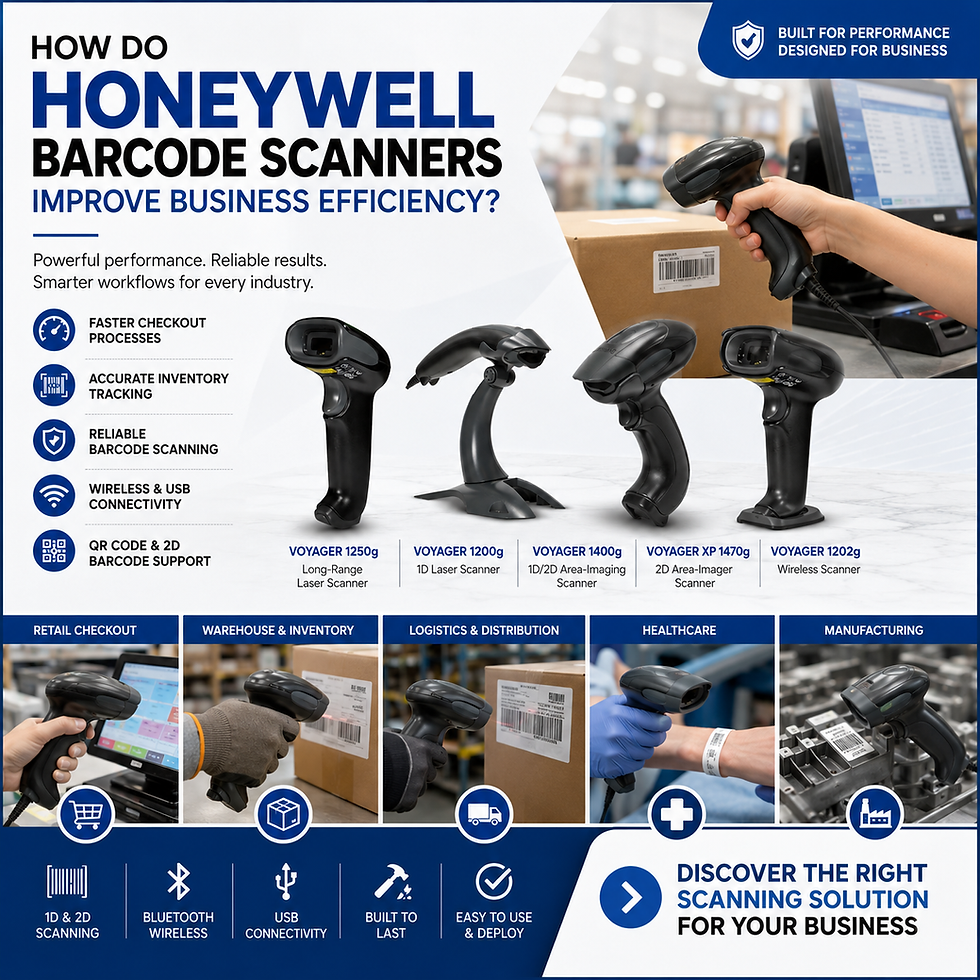
If you are in the UK and you want to buy a barcode scanner there are three kinds of companies that sell them. The big companies, like Zebra Technologies, Honeywell and Datalogic make scanners that're very good and work well in big businesses. They have connections with other companies in the UK so you can get their scanners easily.
Then there are the sized companies, like Newland and Unitech that make scanners that are good and not too expensive. These are good for businesses that need to scan codes. Not too many.
Lastly there are companies that make their scanners and sell them through other companies in the UK. These can be good for businesses or stores that just need to scan a few codes as long as they work with the other equipment they have.
When you want to buy a barcode scanner look for a company that has experience making scanners has people, in the UK who can help you and can sell them to you in ways like you can buy it rent it or pay for it as a service.
Conclusion: Making the Right Choice for Your Business
It's not, however, a decision that should be entered into lightly or based on the simple premise that the product with the best price must be the best barcode scanner for the job. As this guide has demonstrated, the options are not insignificant, and the quality of the barcode scanner in terms of its ability to provide real-world operational benefits rather than becoming the source of frustration in the long run must be carefully considered.
The United Kingdom has a lot of companies that make barcode scanners. They have people who can help you in the United Kingdom. You might need a barcode scanners for a small stockroom or you might need a lot of wireless barcode scanners for many locations. You might even need barcode scanners for the National Health Service that can read GS1 codes.
Whatever you need there is a company that can help you. It is an idea to try out barcode scanners before you buy them. You should work with companies that know about your type of business. Barcode scanners are very important, for your business. They can help you make mistakes and work more efficiently. They can also help reduce problems. That is a good thing.
Read more:


Comments